Tactical Analysis Examines Role of Inverted Wingers in Modern Attack
Coaches increasingly struggle with rigid wide channels that stall buildup, fragment pressing triggers, and force predictable crossing patterns. When fullbacks push high and wingers stay fixed, central zones collapse under opposition pressure. The inverted winger emerged as a structural workaround, cutting inside to occupy half-spaces, but the concept introduces its own operational friction. Without precise role clarity and coordinated spacing, the movement creates gaps rather than overload. Players collide into shared lanes, passing triangles fracture, and transition recovery becomes reactive instead of proactive.
Preliminary Assessment
This tactical configuration delivers measurable benefits in central progression and vertical passing lanes, provided the system maintains transparent responsibilities, rapid transitional timing, and layered defensive recovery. It is not a universal upgrade; success hinges on squad composition, coaching consistency, and real-time adjustment capacity. Treat the inverted winger as a modular component rather than a permanent fixture. Deploy it when midfield control is prioritized, and rotate out when touchline stretching becomes necessary.
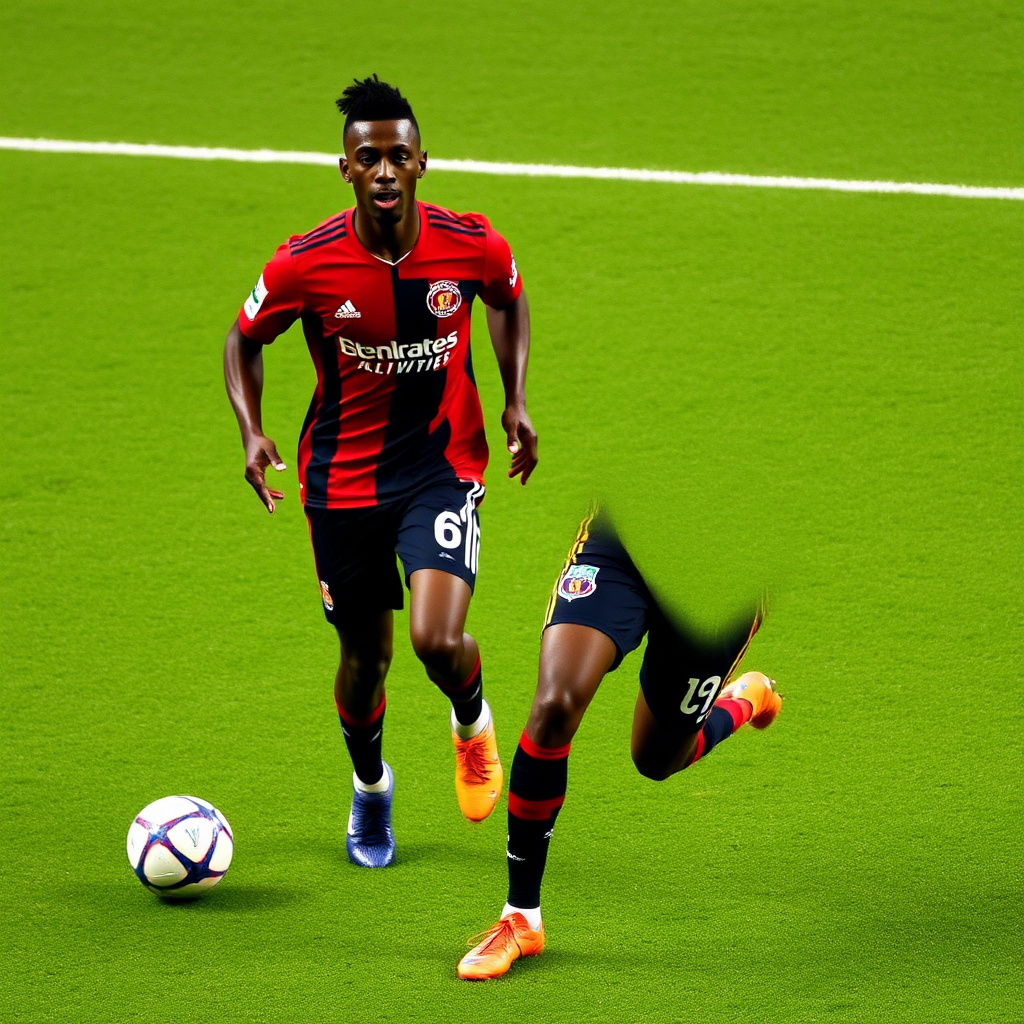
 Hình minh hoạ: Kubet
Scoring Criteria Overview
| Criterion | Tactical Function | Operational Indicator |
|---|---|---|
| Transparency | Role clarity and spatial boundaries | Reduction in overlapping confusion |
| Speed | Transition efficiency from defense to attack | Seconds between turnover and final-third entry |
| Usability | Integration with midfield and forward lines | Pass completion in tight central zones |
| Security | Defensive coverage against counterattacks | Opponent shot quality after wide turnovers |
| Support | Coaching feedback and analytical monitoring | Frequency of positional corrections per match |
Transparency in Role Definition
In interface design, users fail when navigation paths overlap. On the pitch, inverted wingers cut inside while fullbacks advance. If responsibilities aren’t explicitly mapped, players converge into the same channel, collapsing passing triangles. Clear spatial boundaries prevent collision. Coaches must define exact trigger points for the inward run versus staying wide, ensuring teammates know when to exploit the vacated flank. Ambiguity breeds hesitation; hesitation breaks tempo.
Speed of Transition Execution
Latency kills attacking momentum. Traditional wide play allows more time to assess options because defenders stretch horizontally. Cutting inside compresses reaction windows. The system demands immediate first-touch decisions, rapid combination play, and synchronized off-the-ball runs. Delayed switches expose the team to counterpressing. Training drills must prioritize cognitive processing under fatigue, not just technical execution. Decision trees should be rehearsed until muscle memory replaces overthinking.
Usability Within Team Systems
A feature only works if it integrates smoothly with existing workflows. The inverted winger functions best alongside a double pivot or a withdrawn striker who drops into the pocket. When the center-backs split wide, the midfielder shifts centrally, and the opposite fullback tucks in, the structure holds. Misalignment fractures the network. Cross-referencing positional heatmaps with actual pass distribution helps identify integration bottlenecks early. Platforms like Kubet offer structured metric tracking that highlights where spatial expectations diverge from on-pitch reality, allowing staff to recalibrate routing before mismatches compound.
Security Against Counterpressing
Every offensive expansion creates defensive liability. When wide players invert, the exposed flank becomes vulnerable to quick counters. Recovery protocols require the nearest midfielder to track the runner, the opposite fullback to shift laterally, and the back line to compress vertically. Without layered cover, a single turnover yields high-value chances. Defensive shape must remain intact regardless of ball location. Assigning explicit recovery duties eliminates guesswork and stabilizes the entire block.
Support Structures and Feedback Loops
Sustainable performance relies on continuous feedback loops. Video breakdowns, GPS load monitoring, and positional audit reports keep adjustments timely. Advanced scouting environments such as Ku casino provide granular breakdowns of off-ball movements, allowing staff to isolate hesitation patterns and correct decision latency. Coaches who treat tactical implementation as a living system see fewer regression spikes during congested schedules. Regular review cycles prevent drift from the original blueprint.
Strengths and Limitations
The model strengthens central penetration, improves pressing coordination, and reduces reliance on low-percentage crosses. It also simplifies set-piece organization by clustering attackers near the penalty area. Limitations appear when squads lack technically proficient half-space operators or when midfielders cannot cover lateral transitions. Rigid adherence to the system against compact mid-blocks often leads to stagnation, requiring secondary rotations or direct switches to regain rhythm. Balance remains essential.

Who Should Consider This Configuration
Teams building through central overload, possessing high-tempo fullbacks, and prioritizing possession retention over direct wing play benefit most. Clubs with limited true wingers but agile attacking midfielders also find value. Organizations relying on traditional touchline specialists or playing against ultra-low blocks may encounter unnecessary friction. Match up the system to your personnel profile, not to prevailing trends.

Pre-Deployment Checklist
- Audit current wide players’ comfort levels receiving under pressure in half-spaces.
- Map fullback progression routes to confirm non-overlapping spatial zones.
- Test pressing triggers with simulated central overloads in controlled training sessions.
- Establish recovery protocols for the exposed flank before competitive deployment.
- Review match footage weekly to identify decision delays during transition phases.
Frequently Asked Questions
- Does this system replace traditional wingers entirely? No. It functions as a rotational tool rather than a permanent replacement, preserving touchline stretching when required.
- How many matches does tactical integration typically take? Most squads show baseline coherence within four to six fixtures, assuming consistent repetition and clear corrective feedback.
- Can the formation adapt to a back three? Yes, though the wing-back inversion must be staggered to maintain defensive coverage across five central channels.
- What statistical markers indicate successful implementation? Increased progressive passes from wide areas, reduced forced crosses, and higher expected goals from central positions signal proper alignment.
Implementing this approach carries measurable exposure. Overcommitting to central cuts leaves wide zones unguarded, inviting swift transitions. Squad depth matters heavily; rotating tired operators degrades spatial awareness and increases collision frequency. Finally, rigid tactical adherence without adaptive fallbacks turns a progressive setup into a predictable trap. Coaches who monitor usage loads, preserve rotation flexibility, and maintain explicit recovery protocols reduce these vulnerabilities while preserving structural integrity.