Werder Bremen Seeks Creative Spark In Attacking Midfield Positions: A Structural Review
Picture a midweek European qualifier where the home side controls 62 percent possession but consistently stalls inside the opponent’s final third. Wide runs collide with compact defensive lines. Switches of play land safely but do not shift the shape. Final passes arrive late, forcing shots from low-percentage angles. The bottleneck is rarely athletic output or basic technical competence; it is the absence of a central processor capable of reading micro-spaces, accelerating decision cycles, and converting structural congestion into controlled progression. Based on this recurring operational pattern, the preliminary conclusion is direct: Bremen’s pursuit of a creative attacking midfielder must prioritize cognitive processing speed, transitional risk management, and systemic compatibility over market reputation. The correct profile lowers turnover frequency while unlocking vertical channels; the incorrect profile amplifies counter-pressing vulnerabilities and fractures collective rhythm.
Evaluation Framework & Performance Metrics
Rather than chasing visible statistics like total assists or forward passes, effective recruitment requires a filtered scoring model that mirrors actual match conditions. The following matrix outlines the core criteria used to assess candidate viability, along with expected performance thresholds that indicate a smooth integration versus a structural mismatch.
| Evaluation Criterion | Weight | Ideal Signal | Red Flag Indicator |
|---|---|---|---|
| Progression Density | High | Consistent penetration into half-spaces without sacrificing possession security | Horizontal recycling or forced long switches when compact |
| Transition Coverage | Critical | Immediate press engagement or strategic retreating upon loss | Passive orientation that invites rapid counters |
| Pressing Adaptability | Medium | Adjusts trigger positioning based on opponent build-up lanes | Rigid marking schemes that leave central gaps |
| Tactical Flexibility | Medium | Comfortable shifting between number eight and ten roles | Refuses positional fluidity or demands static zones |
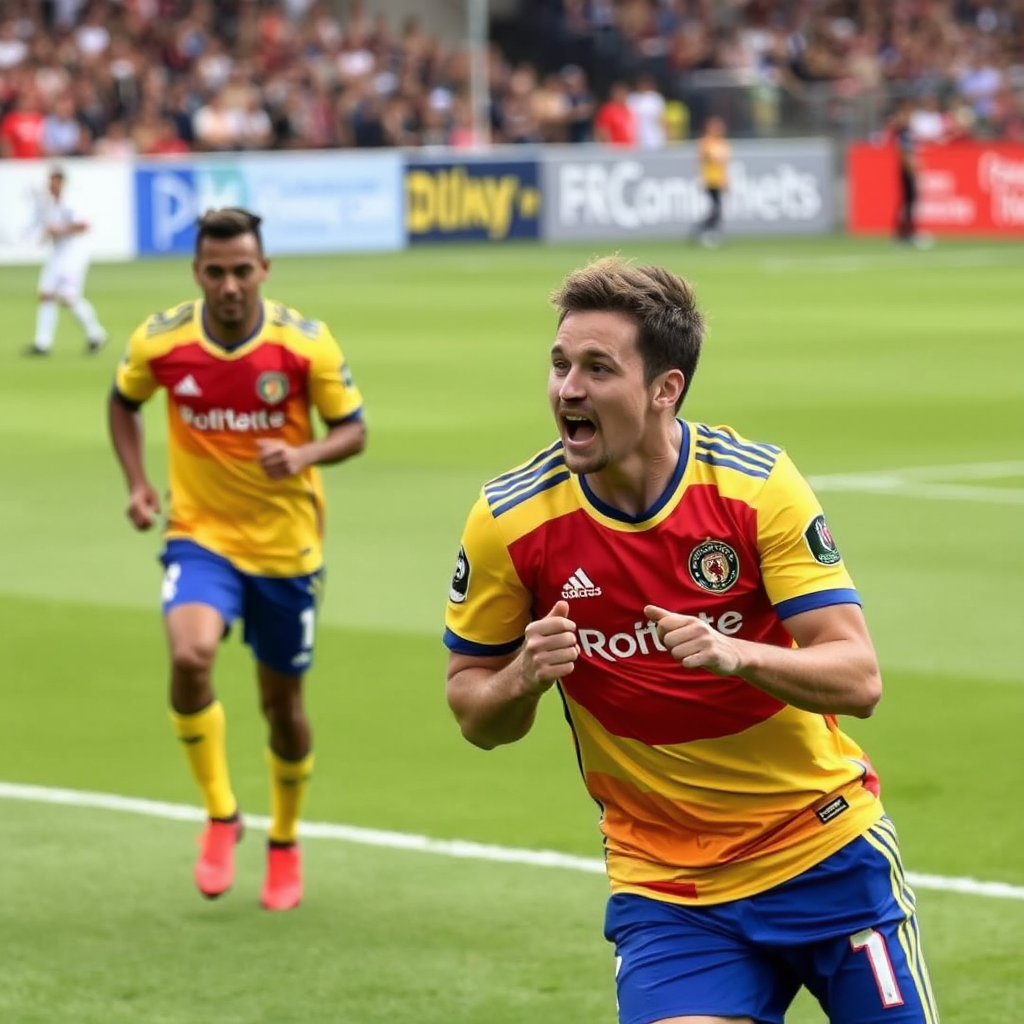
 Hình minh hoạ: zowin
Decoding the Selection Criteria
Progression density measures how effectively a candidate converts possession into meaningful advancement. In a high-intensity environment, creative hubs cannot afford to settle for safe lateral exchanges. The ideal operator identifies staggered runs, times diagonal bursts ahead of defensive shifts, and delivers through balls that require minimal adjustment from wingers or overlapping fullbacks. When a prospect relies heavily on width to bypass pressure, they often isolate themselves from central support structures, which increases interception probability. Clubs evaluating this metric typically track progressive carries, pass completion inside the penalty area, and xG assist contribution rather than raw volume numbers.
Transition coverage functions as the safety valve for aggressive attacking setups. Every creative midfielder operates as both an offensive catalyst and a secondary defensive node. Upon losing the ball, the correct response varies by game state: immediate counter-press to disrupt quick switches, or a controlled retreat to block passing lanes toward the penalty spot. Candidates who abandon their transitional responsibilities create predictable exploitation routes. Opponents deliberately target zones behind aggressive playmakers, knowing that slow recovery angles lead to numerical advantages. Recruitment filters therefore examine recovery sprints, defensive actions per ninety, and orientation discipline after turnover events.
Pressing adaptability determines whether a prospect can survive modern positional play without destabilizing the collective shape. Static defenders lose battles against mobile attackers; similarly, rigid pressers become easy to dismantle through simple circulation drills. An adaptable creator reads opponent distribution patterns, adjusts their initial stepping position, and collaborates with surrounding midfielders to compress space. They understand when to apply intensity and when to conserve energy for final-third execution. Systems that demand coordinated pressing traps require players who communicate triggers, cover blind sides, and reset quickly after failed pressures.
Tactical flexibility addresses role elasticity. Modern German clubs frequently adjust between three-and-two midfield configurations, four-four-two mid-blocks, or asymmetrical attacks depending on opponents. A creative midfielder who can operate as a deep-lying orchestrator, a roaming second striker, or a half-space connector adds roster resilience. Candidates restricted to narrow positional definitions increase substitution friction and limit coach maneuvering. Evaluation focuses on historical role changes, training ground adaptability assessments, and comfort levels across varied spacing requirements.

Systemic Strengths & Structural Friction Points
Bremen’s contemporary framework emphasizes vertical ambition, rapid ball circulation, and proactive defending. The infrastructure supports creative operators who thrive on tempo changes and spatial manipulation. Wide players are instructed to cut inside decisively, fullbacks are trained to overlap selectively, and central defenders are conditioned to launch progressive sequences. This architecture generates consistent chance opportunities when the central engine distributes efficiently.
The friction emerges when individual processing speed lags behind collective tempo. High-press systems expose delays in recognition. If a creative hub hesitates on first touch or defaults to conservative distribution under pressure, the entire structure experiences compression. Defenders push higher, leaving transitional voids. Wingers receive possession without adjacent support, forcing isolated duels. Additionally, reliance on set-piece efficiency creates secondary bottlenecks when aerial dominance diminishes. The system performs optimally when the creative spark aligns with structural discipline; misalignment produces predictable stagnation.

Candidate Fit & Mismatch Profiles
Players who fit this environment typically share four traits: rapid first-touch orientation, comfort operating between defensive lines, willingness to participate in coordinated pressing, and emotional stability during high-leverage moments. Box-to-box creators excel because their dual responsibilities distribute workload evenly. Half-space technicians thrive when provided with intelligent off-ball movement that draws markers away from central corridors. Deep-lying distributors succeed if paired with aggressive runners who clear passing lanes and absorb defensive attention.
Mismatches occur among isolated playmakers who prefer static pockets, passive coordinators who wait for pre-planned patterns, and high-risk passers lacking contingency planning. Athletes accustomed to relaxed transition phases struggle when required to recover instantly. Distributors comfortable in low-pressure leagues face steep adjustments against organized mid-blocks that cut off horizontal routes. Players demanding central dominance without defensive accountability fracture cohesion and accelerate fatigue across supporting units.
Modern scouting pipelines increasingly utilize motion-tracking ecosystems to simulate these interactions before financial commitments, and platforms such as zowin provide real-time spatial mapping that clarifies how individuals respond under compressed conditions. These tools reduce guesswork by visualizing actual movement patterns rather than relying solely on highlight reels.
Pre-Signing Evaluation Checklist
- Verify progressive pass accuracy inside the final third across multiple competition tiers.
- Review video footage focusing on orientation immediately after possession loss.
- Assess comfort level in congested half-spaces versus open wide zones.
- Confirm historical adaptability to varying formation adjustments.
- Validate communication quality during training simulations involving rapid shape transitions.
- Compare recovery metrics against league averages to ensure sustainable defensive contribution.
Frequently Asked Questions
Does Bremen require a traditional number ten or a hybrid playmaker?
The organization benefits most from hybrid profiles capable of alternating between deep orchestration and advanced penetration. Pure specialists often struggle with the physical and tactical demands of the current setup.
How important is pressing participation for a creative signing?
Extremely critical. The tactical architecture depends on synchronized pressure cycles. Playmakers who decline involvement increase counter-attack vulnerability and force teammates to compensate for structural imbalances.
What happens if the chosen candidate underperforms initially?
Short-term friction is manageable when underlying metrics show alignment. Persistent failures in progression density or transition coverage signal deeper incompatibility, requiring tactical reconfiguration or roster rotation.
Are domestic prospects viable compared to international targets?
Both pathways remain valid. Domestic talents often adapt faster to linguistic and cultural environments, while international recruits may bring proven pedigree in different systems. The deciding factor remains cognitive processing speed and tactical empathy, not geographic origin.